Category Archives: Uncategorized
Dear regulatory authorities:
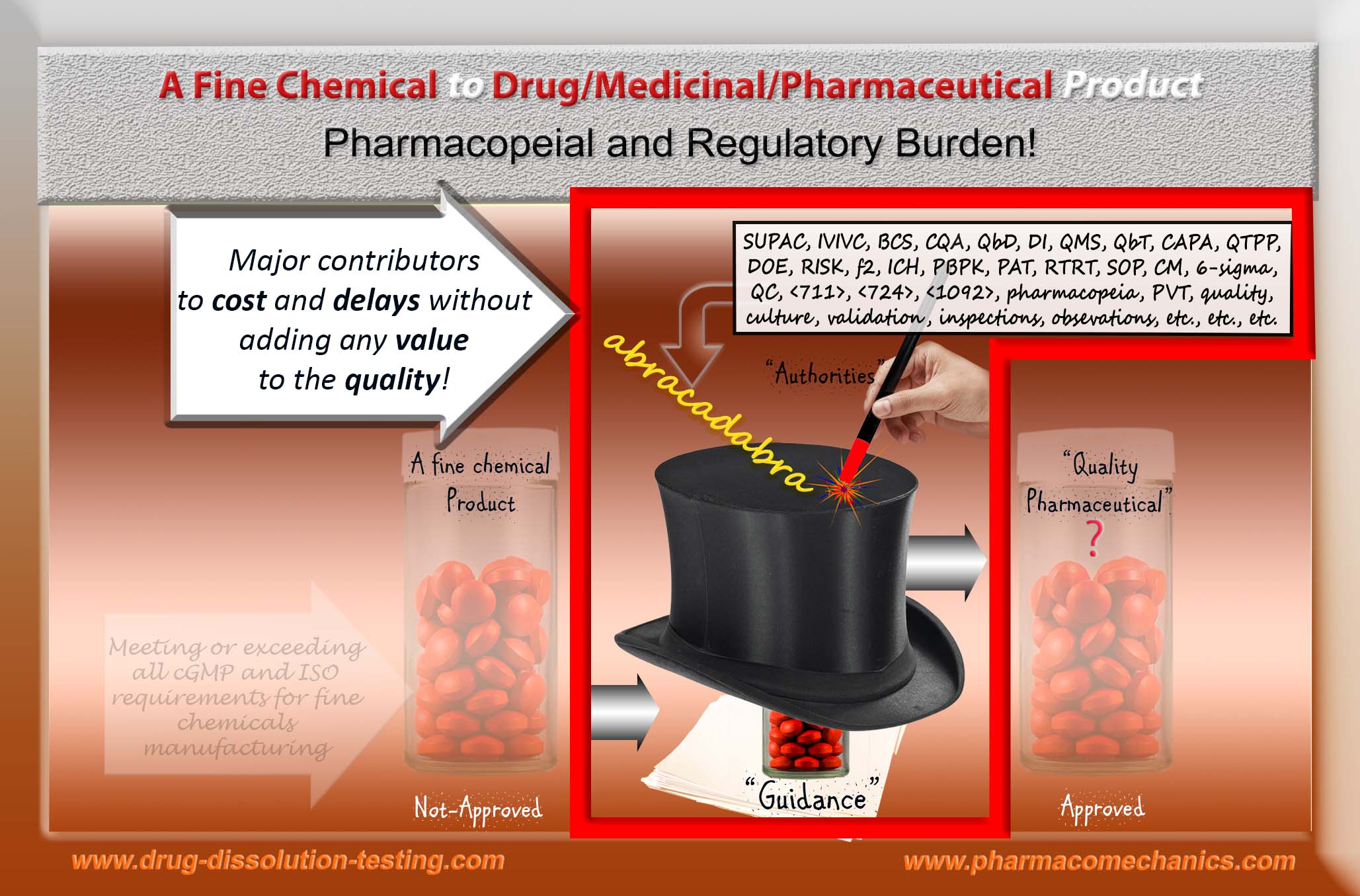
“Regulatory (pharmaceutical) science” – lacks logic as well as science!
One cannot establish quality of anything without knowing or defining it first. This is simple logic!
Regulatory authorities including pharmacopeias, however, have been trying to prove this logic wrong! That is, they have been making claims of establishing and monitoring quality of pharmaceutical products such as tablet and capsule – without knowing or defining it. Obviously, they will fail and have been failed!
Logically and/or scientifically, none of the products (approved or otherwise) available on the market can be considered of quality. Guidance and compliance-based system, along with the plant inspections, is a thick smoke screen hiding the reality and hindering the progress.
Please, define a quality product and set the standards and specifications accordingly so that appropriate quality products could be manufacture and monitored. For further detail, please see here.
Selecting medium for drug dissolution testing: Please pay attention to the principles of science and the laws of nature
Considering solubility characteristics of a drug in the stomach (i.e., pH range of 1 to 3) are pretty much useless from the perspective of absorption of a drug. Even if a drug gets dissolved in the stomach, it will be precipitated out in the intestine if it has lower solubility at a higher pH.
For absorption purposes a drug must dissolve, not necessarily completely but in some quantity, in the intestine where pH ranges from 4.5 to 7. Drugs get absorbed in steps in the intestine by continuous extraction process thus complete dissolution of drugs, at any given time (so called “sink condition”) is not necessary.
Moreover, dissolution characteristics are not usually determined for a drug – dissolution tests are conducted to evaluate products. The choice of medium is linked to the physiological environment of the GI tract not to the drugs or products. Please pay attention to the principles of science and the laws of nature. For further detail please follow the link (http://www.drug-dissolution-testing.com/?p=1749).
Simulation and modelling practices for establishing quality of pharmaceutical products – valid intentions but invalid outcomes
Dear experts:
In the area of simulation and modelling, including developers of commercial software for such, note that I may not be able to argue with you regarding your methodologies of data analysis, modelling and/or simulation aspects as this is not my area of expertise; however, I know with certainty that you would require valid and accurate data for your analysis purposes. The difficulty is that you would not have access to such valid and accurate data at least for the evaluation of tablet or capsule products for the prediction of plasma drug levels or profiles. That is, in vitro drug dissolution results which represent or simulate in vivo dissolution and by extension plasma drug levels or profiles. You would require such data to validate your simulation or modelling outcome at least for the product development and manufacturing stages. Unfortunately, no one, at present, is generating, or can generate, valid in vitro dissolution data, thus your efforts of conducting simulation/modelling are regrettably of no use and would not help the industry, regulatory authorities or anyone else. Please, do not make claims of the successes and usefulness of such exercises.
One of the main reasons for not being able to obtain valid in vitro dissolution or drug release data is that the recommended and required (e.g. from USP and FDA) dissolution testers for such purposes have never been shown to provide valid and accurate dissolution results i.e. these testers have never been validated for their intended use or purpose. Vendors/manufacturers make extraordinary efforts and take pride in providing “compliant” testers i.e. meeting or exceeding “physical or fixed” specifications according to the pharmacopeial (such as USP) requirements; however, unable to validate the testers as dissolution testers. For example, no vendor, at present, can provide you valid in vitro dissolution results if given a blinded sample of a tablet/capsule product. Therefore, in this respect claims made by the vendors are also not accurate that they are selling or manufacturing dissolution testers. At best, the only claim they can, or should, make is that they are selling simple stirrers. Perhaps more disturbing is the fact that these stirrers when used as required for dissolution evaluations, because of their design and operation limitations and flaws, cannot provide valid and accurate dissolution results which is documented extensively in the literature.
In short, please use and promote the simulation and modelling techniques with care and certainly use extra caution in making claims for such about the future expectations and successes.
Regulatory requirements for establishing quality of pharmaceutical products – serious scientific and cGMP deficiencies and flaws!
[I posted the following comments on a discussion on the AAPS Community Forum; I think visitors of this website would also find it a useful read].
Thanks for your comments in response to my post. I am not sure how should I respond because focus of your comments is more of philosophical than subject matter.
Indeed I worked with Health Canada as a research scientist to provide support and critic on the underlying scientific aspects of the assignments. Most of my laboratory work has been published and views have been known publically as well – as you noted. I have never undermined any ones’, including authorities’, hard work or practices. However, through my laboratory work and related applied experience, I did find some very disturbing misunderstandings about the use of science for quality assessment of the pharmaceutical products. The drug dissolution testing is one part of it and the second more noticeable is the claims of establishing quality of the manufactured products in particular tablet and capsule. These misunderstandings should be highlighted and addressed, in my opinion, not that be ignored and concealed otherwise everyone involved in it will lose their credibility, in particular scientific, for a long time to come.
Your statement that “We, working in the industry, have worked very hard trying to make it work.”, I am sorry what does it mean? Can you determine dissolution characteristics of a given blinded product sample? Have you used a validated dissolution tester for dissolution testing, how? How could you or anyone else develop a valid dissolution method without the availability of a validated dissolution tester? Are you able to define and establish quality of a product using drug dissolution method, how? Please, note that quality of the products is not even defined yet with a measurable parameter, then how could a dissolution test be used as a quality control tool? These are some of the unanswered questions about the use of flawed science and its practice in manufacturing and regulatory assessments. These questions are not directed towards you as a person but to the industry and regulatory authorities in general. I do not know how I can specifically direct my concerns only to the regulatory authorities. I do not think that AAPS Community Forum is only for the industry. I observed it is equally read and participated by the regulatory scientists as well. A discussion was just started on this community forum by a scientist from FDA (e.g. see under METHODS IN IMAGING DATA ANALYSIS).
So please join hands with me and inform the regulatory authorities that there are serious problems in regulatory requirements rather than suggestion of avoiding discussions of these issues. This would not be public service or service to patients but something else!
Regarding the scientific aspect you noted from my post “A dissolution method should not be used for product development until and unless it has been clearly shown …………”, this is not my view or my suggested requirement – this is general principle of science and regulatory (i.e. cGMP) requirement. If anyone is not following or meeting this requirement then the results obtained would not, at least should not, be accepted under (cGMP regulation as an example I quote the following three FDA regulations for your information [21 CFR 111.320, 21 CFR 820.72, 21 CFR 211.194 (a) (2)].Please correct me if I am wrong on this.
In the end, please consider using this forum informing the authorities that fundamental scientific principles, as well as cGMP requirements, are being violated which need to be addressed so that industry could be able to function appropriately and public should receive accurate and honest information about the quality of the manufactured pharmaceutical products.
I will be happy to provide help to anyone in explaining the issues and suggesting possible solutions to such if you suggest or provide leads in this regard. I look forward to future fruitful discussions on the subject with you.
With best regards.
Citizen Petition (FDA) – Requesting withdrawal of drug dissolution apparatuses from FDA regulatory requirements
Today, I have submitted a Citizen Petition on the FDA site on the above mentioned subject (Tracking Number 1k2-94p3-9n4b). The content of the petition may be found here. I will keep you updated with the progress).
A revised Citizen Petition has been registered with the FDA (FDA-2018-P-3742) and can be found here (https://tinyurl.com/y9oaxe5t). (October 3, 2018)
F2 (similarity factor): An arithmetic skill-test – not a widget for quality assessment of pharmaceuticals
While surfing the internet, I found a prize Claim Form from Tim Hortons (Coffee Shop), which requires the winners to complete a skill test, a simple arithmetic exercise, to claim the prize (link). The exercise goes like this: multiply 2×4, add 8, subtract 4, add 6 and then show the correct answer. The exercise is unrelated to the quality or value of the prize, but a requirement for receiving the prize.
It reminds me of F2 (similarity factor) requirement, which is a very similar arithmetic exercise as well, with added parameters of taking logarithm and square root of numbers to come up with an answer to receive the “prize” of “regulatory compliance”, i.e. regulatory approval of your product (usually tablet/capsule) as bioequivalent with or without a human bioequivalence study. The point being, the skill test, in this case “similarity factor” unrelated to the product quality (scientifically, statistically or otherwise) and/or lack relevance to human bioequivalence study, but is required to meet a compliance requirement (link).
BTW, if you would be using a scientific calculator or computer spreadsheet for the calculations, then you might also be required “validation” of the calculator and spreadsheet software, and its use, to confirm if they or you are performing proper calculations for which one might require help of a CSV (Computer Software Validation) expert or consultant.
Just a thought in case you are considering using F2 (similarity factor) for your studies or product evaluation for regulatory compliance – otherwise you do not have to worry about this factor as this is pretty much useless exercise unrelated to quality aspect of the pharmaceutical products.
Data integrity/management violations or accommodating flawed regulatory requirements for compliance?
It has almost become fashionable to talk out loud about data mismanagement and integrity issues in the pharmaceutical industry highlighting lack of trust in the industry’s competency and honesty by the regulators and associates, which is really unfortunate. Please, do not be this distrustful! Many times many influential people in regulatory agencies come from the industry and vice versa. People cannot be dishonest only on one side. I doubt that the pharmaceutical industry has a higher ratio of bad behavior to good behavior when compared to any other industry – perhaps less.
In my opinion and experience, people in the pharmaceutical industry are doing their best to accommodate flawed (non-scientific and illogical) regulatory requirements. It is the regulatory authorities which have to correct their assessment methods and approaches including inspections.
For example, considering the case of generic product assessments, both in vivo (bioequivalence) and in vitro drug release/dissolution, are based on scientifically invalid methods and/or testers which cannot provide accurate and reproducible results as well as quality products. This would simply be impossible. To bring the data/results within acceptable range to meet compliance requirements, not the quality which is undefined as of yet by the authorities, the industry has to “play” with numbers and techniques such as repeats and discarding test results. This appears “data fudging” (or “dishonesty”), most often to those who have limited expertise and experience working in the laboratory environments. Please avoid such blames under the practices of computer software validation, data integrity, data security, missing data trails, etc. These are neither helping nor addressing the underlying issues.
The only possible solution to address this lack of trust situation is that the regulatory authorities, including pharmacopeias, have to clearly define quality of the products with an objective measurable parameter. Let the industry meet these standards using scientifically valid and qualified methods not working with the flawed science imposed by the authorities.
The following are some relevant links provide further details in this regards:
http://www.drug-dissolution-testing.com/?p=3069
http://www.drug-dissolution-testing.com/?p=3065
http://www.drug-dissolution-testing.com/?p=3007
Quality of pharmaceutical products: “Regulatory Science” – its illusions, obstacles and a potential solution.

“Regulatory Science” is a term often used to describe practices of national, sometime international, bodies to establish and monitor quality of pharmaceutical products such as tablet and capsule, which would include safety and efficacy aspects as well. A clear description of the term “Regulatory Science” appears to be lacking. In practice it may be considered as a practice of setting standards (specifications) and protocols for describing and establishing quality of products available on the market for human use. The underlying concepts for setting standards/specifications and protocols usually come from the fundamental principles and laws of sciences, engineering and mathematics such as biology, chemistry, manufacturing and statistics. “Regulatory Science” uses these scientific principles to set specifications and protocols, rather than generating new scientific knowledge which is generated under the auspices of a specific scientific and/or engineering discipline. Therefore, regulatory bodies hardly ever generate new scientific knowledge but use it to generate specifications and standard procedures for implementation for the public good. The authorities also get the mandate to enforce the developed and suggested specifications and protocols – as these are intended to be followed. This mandate of enforcement results in the term “compliance” i.e. industry must adhere (“compliant”) to the standards and protocols for their manufactured products to be approved for marketing. Continue reading
Time to rescind the regulatory requirements of bioequivalence evaluations and the current pharmacopeial drug dissolution practices as these do not provide quality assessment of pharmaceutical products
Considering the non-specificity, because of confounded variabilities from the physiological system, drug release assessment of pharmaceutical products (tablet/capsule) for which this test is conducted, the bioequivalence test becomes a scientifically and statistically in-valid practice. See here for further discussion on the topic (1,2).
An in vitro drug release test, commonly known as drug dissolution test, which by its nature avoids the above mentioned non-specificity, provides a better alternative for assessing drug release characteristics of the products thus their quality. Pharmacopeias worldwide recommend this test. Unfortunately the recommended testers suffer a serious design problem thus providing irrelevant and unpredictable results not reflecting product quality or lack of it (3,4). In short, the drug dissolution tests as currently recommended are based on non-qualified and/or non-validated testers, hence results from the testing cannot be relied upon. Therefore, their use is to be discontinued as well.
As a solution, a simple revised dissolution testing approach has been suggested which would provide superior drug release evaluation thus quality of the products for human use (5, 6). In addition, as it is an in vitro technique, the test can be conducted without the use of human subjects avoiding unnecessary risk to participating healthy volunteers and/or patients. The suggested approach not only provides scientifically valid method for assessing quality of the pharmaceutical products but also would give much needed flexibility to pharmaceutical industry for innovation to bring out products faster, and with a reduced price, into the market.
Quality generic products without bioequivalence (BE) assessment – a simple and practical approach!
Considering the weakness (non-specificity) of BE assessments it is suggested that in vitro drug dissolution/release testing would provide a better alternative to establish quality of pharmaceutical products such as tablet and capsule. It is argued that the use of in vitro dissolution test should be the method of choice for developing and monitoring improved or better quality generic products because BE assessment focuses only on equivalence and not on the improvement of the product quality. Other significant advantages of using an appropriate in vitro dissolution test in lieu of BE assessment are described..
For further detailed explanation please follow the link.
Pharmaceutical products quality and bioequivalence assessments – what a waste and needless use of human subjects!
A bioequivalence study is conducted in humans to establish that two or more products are capable of providing same/similar blood/plasma drug levels. Underlying assumption is that if the products provide same plasma drug levels then their therapeutic effects would be the same as well, thus would allow interchangeability of the products such as the generics.
Therefore, for all practical purposes the bioequivalence assessment may be considered as a typical analytical chemistry test where the assessment is based on determining plasma levels. For conducting an appropriate and accurate analytical test, the test must follow some fundamental principles of analytical tests such as specificity and its validation (accuracy, precision and reproducibility). A test cannot be validated if it is not specific.
In this regard, a bioequivalence test is a non-specific test as plasma drug levels include (confounded) variabilities from stomach emptying/motility and liver metabolism of the drug – independent of the product characteristics. Therefore, caution is warranted in establishing quality of the test products based on the bio-equivalence test.
For further detailed explanation please follow the link.
Pharmaceutical product manufacturing as per current regulatory requirements!
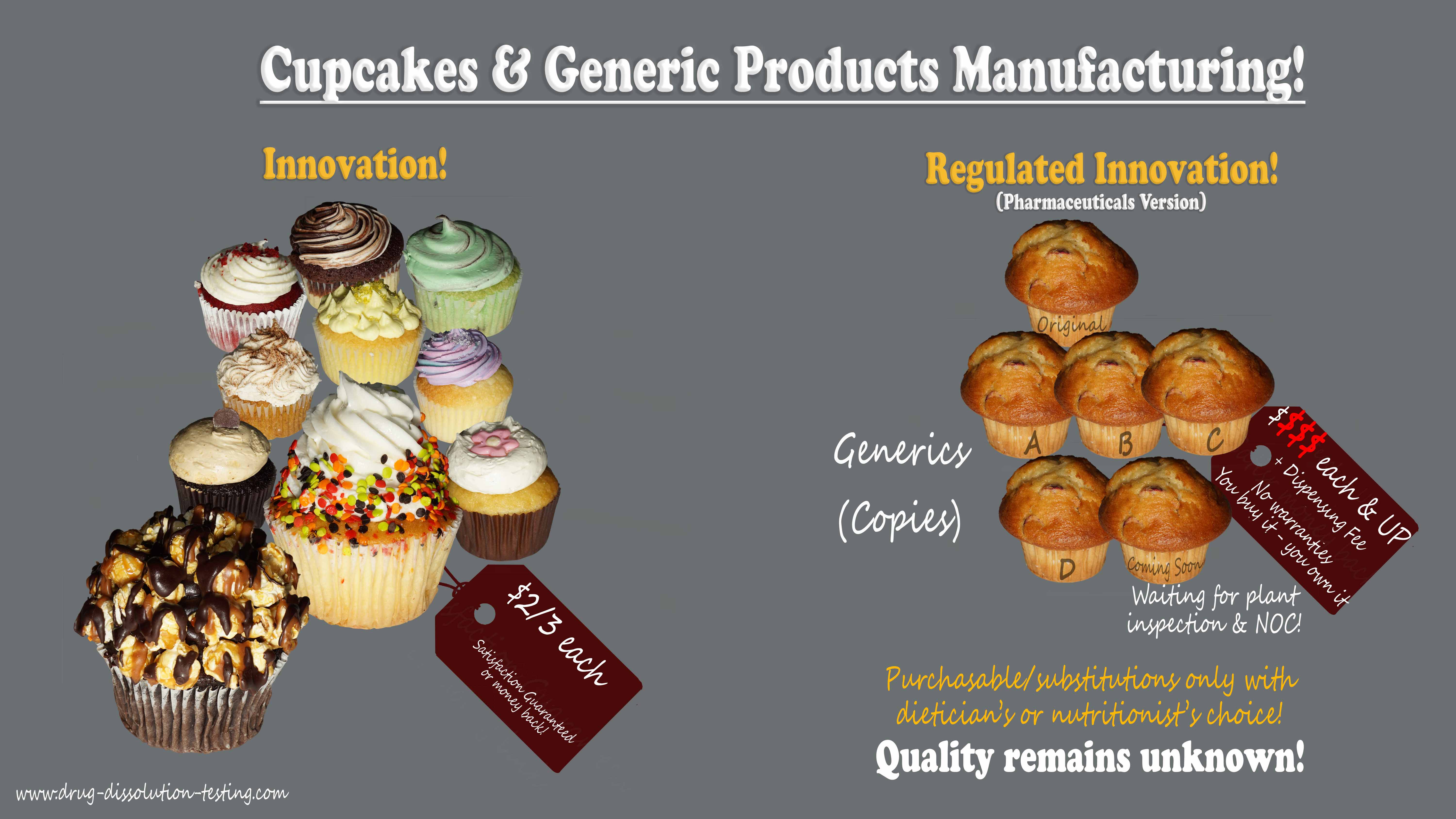
Consumers and patients must wait, and suffer, for the availability of quality pharmaceutical products such as tablet/capsule as well as their genuine and affordable prices. The reason may surprise you!

It is important to note that at present availability of the pharmaceutical products such as tablet and capsule is heavily regulated, more accurately controlled, by the regulatory authorities worldwide. Manufacturers and suppliers have to follow extensive suites of protocols (national and/or international) to get their products approved for marketing. These protocols are often described by different names such as regulations, guidelines, standards etc. The manufacturers have to be in compliance with these protocols literally to the letter, which are mostly arbitrary in nature. Thus, in practical terms contrary to popular belief, there is limited or no room for deviation, simplification and/or innovation from these protocols at least from the manufacturers’ side.
In simple terms, these protocols may be considered as formats for data/results presentations, may these be for the product development or manufacturing – promoted as regulatory science. However, unfortunately, these are administrative and procedural requirements, not the practice and/or requirement of the science. The underlying “science” remains based on traditional practices and assumptions, more accurately may be considered as rituals. Therefore, with the passage of time and the introduction of extensive sets of standards and requirements, the burden of adhering to these regulatory formats (“guidelines”) has become increasingly frustrating, time consuming and financially challenging for the both, authorities and the manufacturers, without any added value to the product quality and/or benefit to the users.
In addressing these challenges, manufacturer bashing approaches (implied or explicit) are common and fashionable, often criticizing lack of their integrity and competencies. This approach certainly appears to be a deviation away from the regulatory mandate or requirements which is establishing and monitoring quality of the products and not that of assessing and criticizing manufacturing ability or capacity. Regulators’ and their associates should be able to establish if the manufactured products, at the consuming stage, are of the required quality, and by extension, safe and efficacious. However, they can’t at present – thus deviation from their mandated objective!
There are two reasons for this regulatory shortcoming: (1) Regulatory authorities have never defined required quality, and its associated parameter, for the product assessments. In fact, it could be argued that it is unknown to them. (2) Authorities require and enforce a large array of flawed product testing requirements for compliance purposes without their validations and relevance. As these requirements lack scientific credibility and validity, anybody, not just the manufacturers, would have difficulty in meeting or will be unable to meet the current regulatory requirements and expectations. For a more technical description of this aspect please consider viewing the links provided below.
Therefore, there is a clear need for re-evaluating the practice of setting regulatory standards and requirements starting with the definition of a quality product followed by the use of scientifically/GMP valid instruments and procedures. Otherwise, it is impossible for the manufacturers to produce quality products, and for the regulators developing and implementing appropriate guidelines and standards for product evaluation.
Some suggestions are provided to address these issues, and it is sincerely hoped that authorities will give consideration to these thoughts.
For further reading:
(1) http://www.drug-dissolution-testing.com/?p=3022
(2) http://www.drug-dissolution-testing.com/?p=3007
(3) http://www.drug-dissolution-testing.com/?p=2956
(4) http://www.drug-dissolution-testing.com/?p=3037
(5) http://www.drug-dissolution-testing.com/?p=2922
Are bioequivalence (BE) assessments of clinical significance and relevance? Not really!
A discussion is provided showing weakness of BE assessments for comparing or establishing quality of products such as tablet/capsule. It is argued that in vitro drug dissolution/release testing would provide a better alternative for the assessment of the quality of such pharmaceutical products. Please click here for complete article.
Regulatory compliance is more appropriate description than QC/QA

It is important to note that at present pharmaceutical laboratories are operating under non-GLP/GMP conditions, in particular for the assessment of solid oral dosage forms such as tablet and capsule products. This is surprising that such negligence has been going on unchecked. This deficiency needs to be corrected so that facilities can be considered as QC/QA laboratories to provide relevant and accurate quality characteristics of the products. For further details, please follow the links (1, 2, 3).
Need for a quantifiable quality parameter for pharmaceutical (tablet/capsule) products
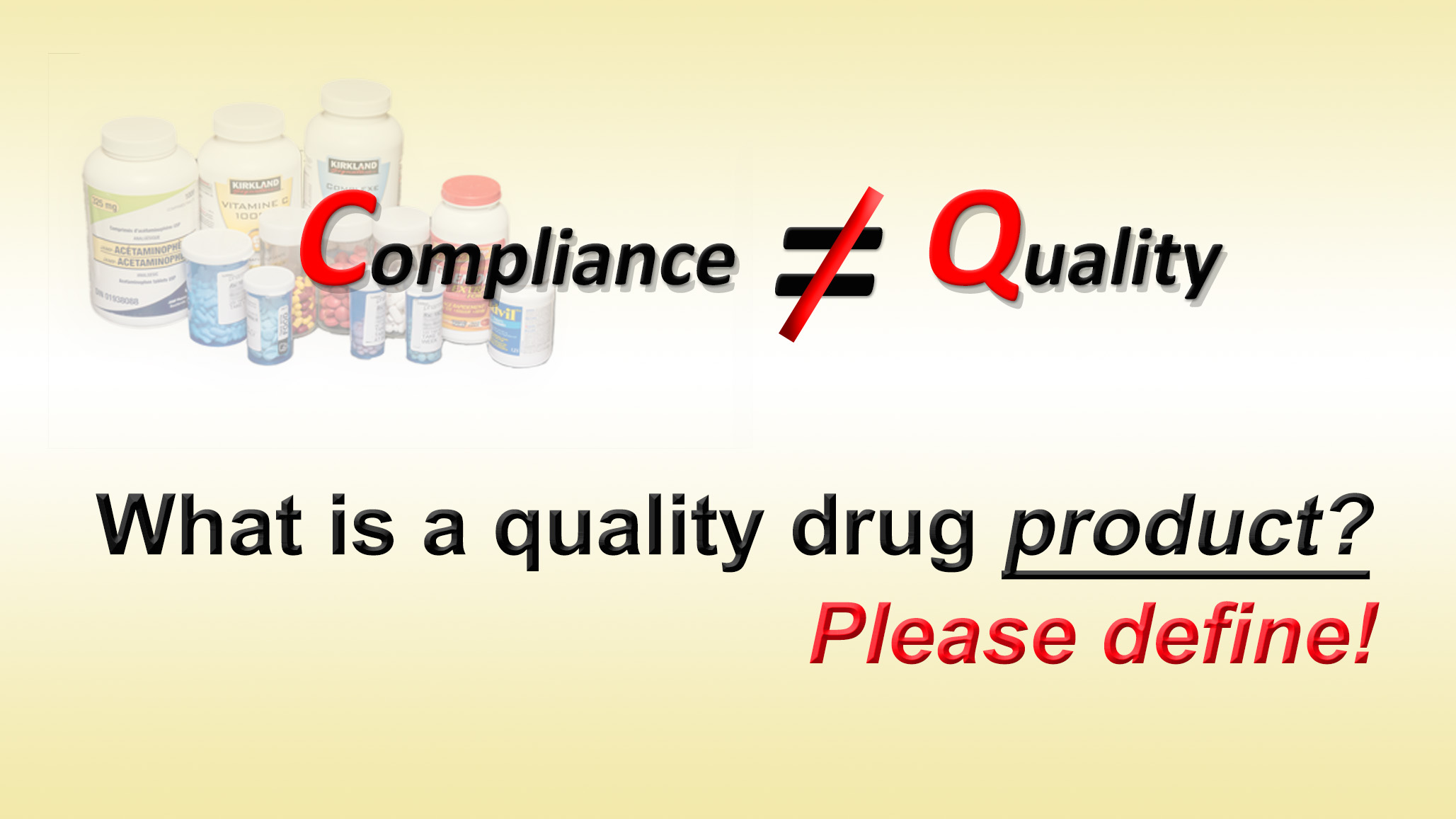
People try to understand the logic and scientific principles behind the (pharmacopeial and regulatory) “compliance” requirements for meeting the quality aspect of the pharmaceutical products such as tablet/capsule. However, there is hardly any scientific principle involved in most of the current “compliance” requirements in the area. Most compliance requirements are based on subjective (individual or collective) opinions and guesses, often presented through publications or regulatory guidance documents to gain or establish their authenticity. For example, in the area of establishing quality of the manufactured products, such as tablet/capsule of both generic and branded products, nowhere it is defined what would be considered as a “quality product” and how the quality should be measured or established. However, all the pharmacopeial and regulatory requirements (national or international) make claims of achieving it. Is it not interesting that quality of a product is not defined or known, but claimed to be achieved, how?
Quality assessment of pharmaceutical products – regulatory/pharmacopeial standards and methods require urgent attention!
A patient needs a drug but prescribed or purchases a drug product (such as tablet or capsule) with an implied assurance that product will release the drug in the body as expected to provide its therapeutic effect. This characteristic of drug release/delivery in the body from the product defines the quality of the product.
At the manufacturing stage one hardly ever conducts clinical tests to establish the safety and efficacy of the products but only the “quality” tests. The reason being if the quality is acceptable then safety and efficacy will be acceptable as well because drug levels in the body and safety and efficacy are directly linked.
The tests most often conducted to establish quality of products at the manufacturing stage are the chemical tests, commonly known as in vitro tests. The most common in vitro test which is conducted to establish drug release or quality of the tablet/capsule products is known as a drug dissolution test. This is the only test which forms the basis of quality assessment of tablet/capsule products. Regulatory authorities, including pharmacopeias, worldwide recommend and enforce proper use of this test to establish the quality of the products. There are numerous guidance documents available from the regulatory authorities, including US FDA, which describe the requirements of the dissolution testing procedures forming the basis of drug product approvals.
The important, and perhaps a very disturbing, fact to note here is that the dissolution testers, along with associated methods, as recommended by the authorities have never been validated for their intended use or relevance. In fact, many scientific studies (e.g. link) have clearly shown that the tests do not and cannot provide relevant results i.e. the testers cannot provide accurate results/data regarding the products (tablet/capsule) quality. Therefore, any claims made regarding the quality of the approved products by anyone, including authorities, lack accuracy and scientific authenticity.
The regulatory authorities enforce extensive set of requirements and standards through elaborated set of “compliance” guideline such as ICH or US FDA guidance documents for establishing quality of the products. This guidance-based compliance system is directly or indirectly dependent on the drug dissolution test at least for tablet/capsule products. Therefore current guidance-based system is not only providing false assurance about the quality of the products but also causing severe hindrance for the industry to produce quality products appropriately and efficiently. In addition, this guidance based system adds enormous administrative burden for both, authorities and manufacturers – unfortunately of no or limited benefit to either party. Furthermore, as the recommended testers are non-qualified/non-validated which makes them non-GMP compliant, thus authorities could easily be found in violation of GMP practices – potentially a serious and disturbing claim. Therefore, this deficiency should be addressed on an urgent basis with the highest priority.
It is important to note that scientific studies have clearly shown that currently recommended apparatuses have a design problem which could be corrected by simple modification. Suggestions have been made in the literature in this respect addressing the issues. Further information in this regard may be obtained from here.
In short, authorities should take a note of this critical deficiency which exists in the drug product approval requirements caused by requiring non-GMP drug dissolution testers. This deficiency needs to be addressed quickly so that quality of the manufactured products could be established and monitored accurately and efficiently.
Quality equals safety/efficacy of the pharmaceutical products
[This post results from a query to one of my posts on LinkedIn Network (link), I think visitors of my website would also find it a useful read]
I believe your view/confusion is valid and understandable considering the current state of drug product evaluation practices. Note that this confusion occurs from considering or mixing drugs and drug products as the same. You are not alone with this confusion; even the regulatory authorities are confused with it, in fact indirectly extending it. For example, for generic product evaluations US FDA requires ANDA (abbreviated new DRUG application, in Canada ANDS), which is an incorrect terminology and in reality these are new PRODUCT applications (link). Your confusion also appears to be arising from the same mix-up i.e., not differentiating the drugs from drug products.
My post is regarding PRODUCTs, where one hardly ever conducts clinical tests/studies especially at the commercial production stage. Safety and efficacy studies/evaluations of DRUGS are done in the beginning, sometimes decades ago (e.g., consider the examples of aspirin, acetaminophen, ibuprofen, and others perhaps most drugs). From these clinical studies dose levels are set based on their safety and efficacy profiles.
At the production stage these drugs as PRODUCTS are manufactured worldwide without any further clinical evaluation. At the production/manufacturing stage objective is to produce PRODUCTs of the drugs which must contain the required dose and they must also be capable of providing (often described with terminologies of releasing/delivering/bioavailability) expected amount of the drug in the human body whichever route of drug administration is suggested (often time it is oral, but could be others IV, dermal, sublingual etc.). There would not be any concern or focus here for the safety and efficacy of the drug, along with other non-actives or excipients, which have been already established. In the generics cases, these are assessed often by bioavailability or bioequivalence assessments which is also usually one time shot and often at the pre-production stage. The point being that at the production stage there is hardly any (clinical) safety and efficacy assessment.
On the other hand, at the production stage safety and efficacy refer only to the ability of the product to release drug/dose as expected and this becomes quality metric for the product. If a product does not deliver/release the drug/dose as expected it would not be of quality which mean (equal to) it would not be efficacious and/or safe. This is where equality comes from (you may consider it as mathematical relationship if you like which may not be incorrect either), however, we are dealing with yes/no, pass/fail, or equal/not-equal situation.
So, in short, at the production stage of the PRODUCTs, quality is equal to safety and efficacy.
Compliance/guidance-based regulatory system and products safety and efficacy assessment
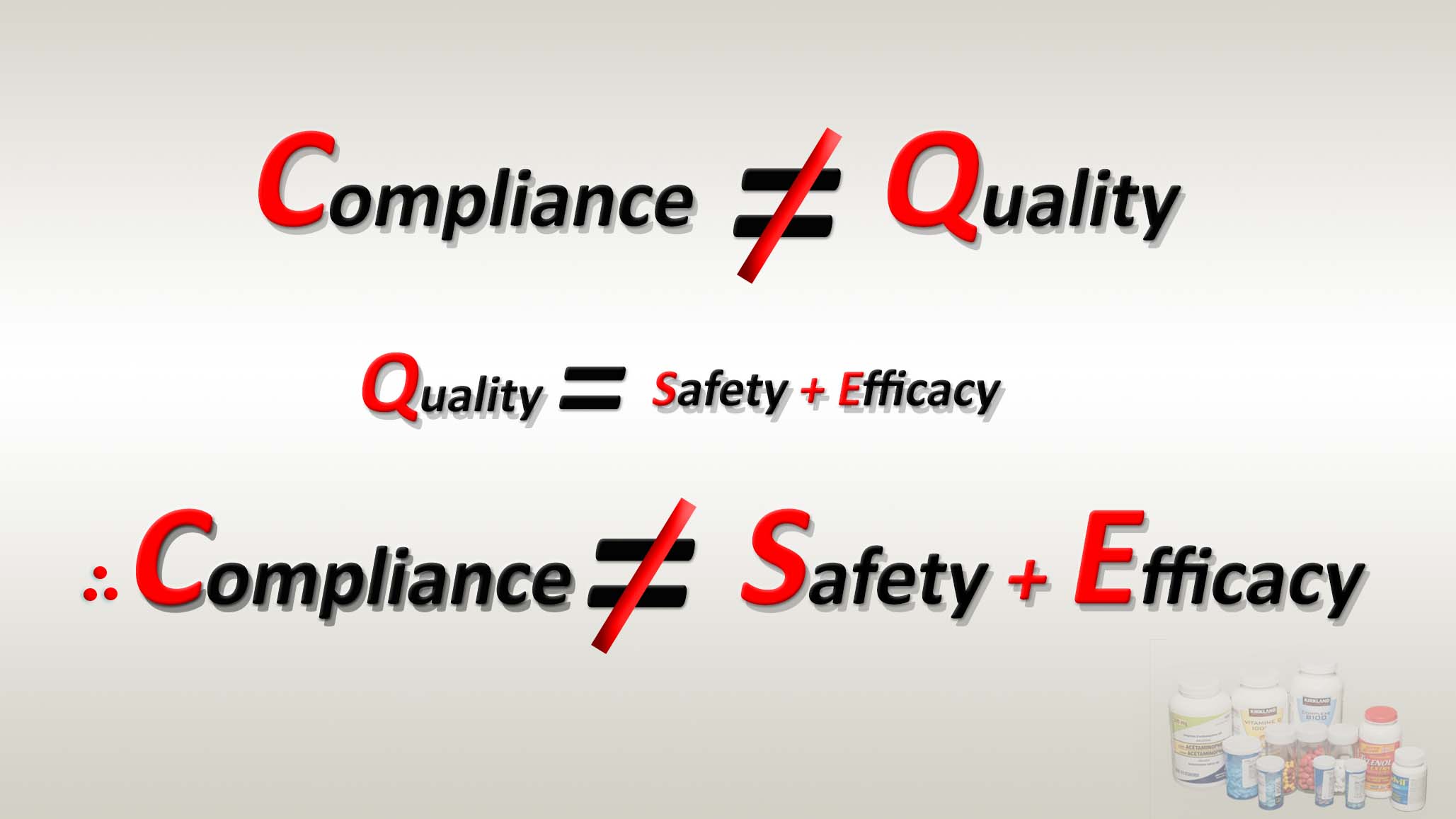
Safety and efficacy of the pharmaceutical products (e.g. tablet/capsule) can only be established by determining quality of the products. If quality of the products cannot be established, as currently is the case, then claims of safety and efficacy cannot be made either. In addition, as compliance does not necessarily equate quality, safety and efficacy cannot be achieved by compliance as well. Use caution in promoting or accepting such claims. Quality of the products, and by extension their safety and efficacy, has to be defined and determined independently.
Please seek definition of the quality of the pharmaceutical products in terms of a quantifiable parameter to substantiate claims of safety and efficacy. For further details the following links would be useful (1, 2, 3) .
Validation – what it really means!
It is really hard to believe or accept how people have been blind-sided with “validation” (re-validation, continued validation etc.) requirement. The simple fact is that to run validation for any process one requires a reference product or parameter to show that process is validated (or capable of providing an expected outcome or product). If one does not have a reference product with known parameter and its value, then it is impossible to validate anything. Please, people this is logic and science 101.
If anyone is requiring or conducting validation without a reference (as in the case of current practices of manufacturing of quality pharmaceutical products in particular tablet/capsule), then validation of such manufacturing processes must be considered as “abracadabra” practices commonly accepted as meeting the “compliance”, “harmonized standard” etc. and do not link to quality aspect of the process or product.
I hope authorities, including pharmacopeias, will work in addressing these bizarre trends of validation approaches/concepts currently in practice and/or required, which have no scientific and/or logical basis.
Please, define a quality product and then provide a reference product which would allow the manufacturers to meet or exceed the standards of quality.
Revision of the USP General Chapter <1058> – a credibility issue!
Whenever one would like to evaluate a pharmaceutical product such as tablet/capsule, a commonly accepted approach is to seek a test described in the USP. The reason being that the tests described in the USP are being promoted and considered as references for products testing. The USP often provides seminars and hands-on training describing these tests (e.g. drug dissolution) and their validations. The regulatory authorities world-wide enforce the standards described in the USP monographs (see e.g. US FDA dissolution methods database, https://tinyurl.com/y78ovyez) considering that the methods and associated instruments described in the USP are adequately and independently qualified and validated.
With the revision of the USP General Chapter <1058>, however, this situation appears to have changed (https://tinyurl.com/y9wdfl58). In the revised Chapter it is described that the users are responsible for the qualification, and by extension validation of the instruments. This may not be a true representation of the practice. If this would have been the case then instruments would have to come with the users’ reference as to who performed the qualification (as well as how), and on what basis the instruments have been included in the USP. In reality, vendors and users promote manufacturing and the use of these instruments, respectively, by making claims that instruments manufactured or used are as per “USP specifications”, not those of their own qualification or validation standards. Obviously, this revision of the USP chapter is unusual and in error and might impact negatively on USP’s credibility as a standard setting organization for quality assessment of pharmaceutical products.
If the issue is with a certain specific type of instruments such as drug dissolution, which are known to be non-qualified and non-validated, then a more appropriate approach would be to remove such instruments from the USP rather than creating doubts about the qualification/validation of all instruments and associated methods described in the USP.
It is my view that the revision of the Chapter is not in line with the USP objectives and practices, and the decision may have been taken in haste, therefore, requiring reconsideration.
Self-explanatory
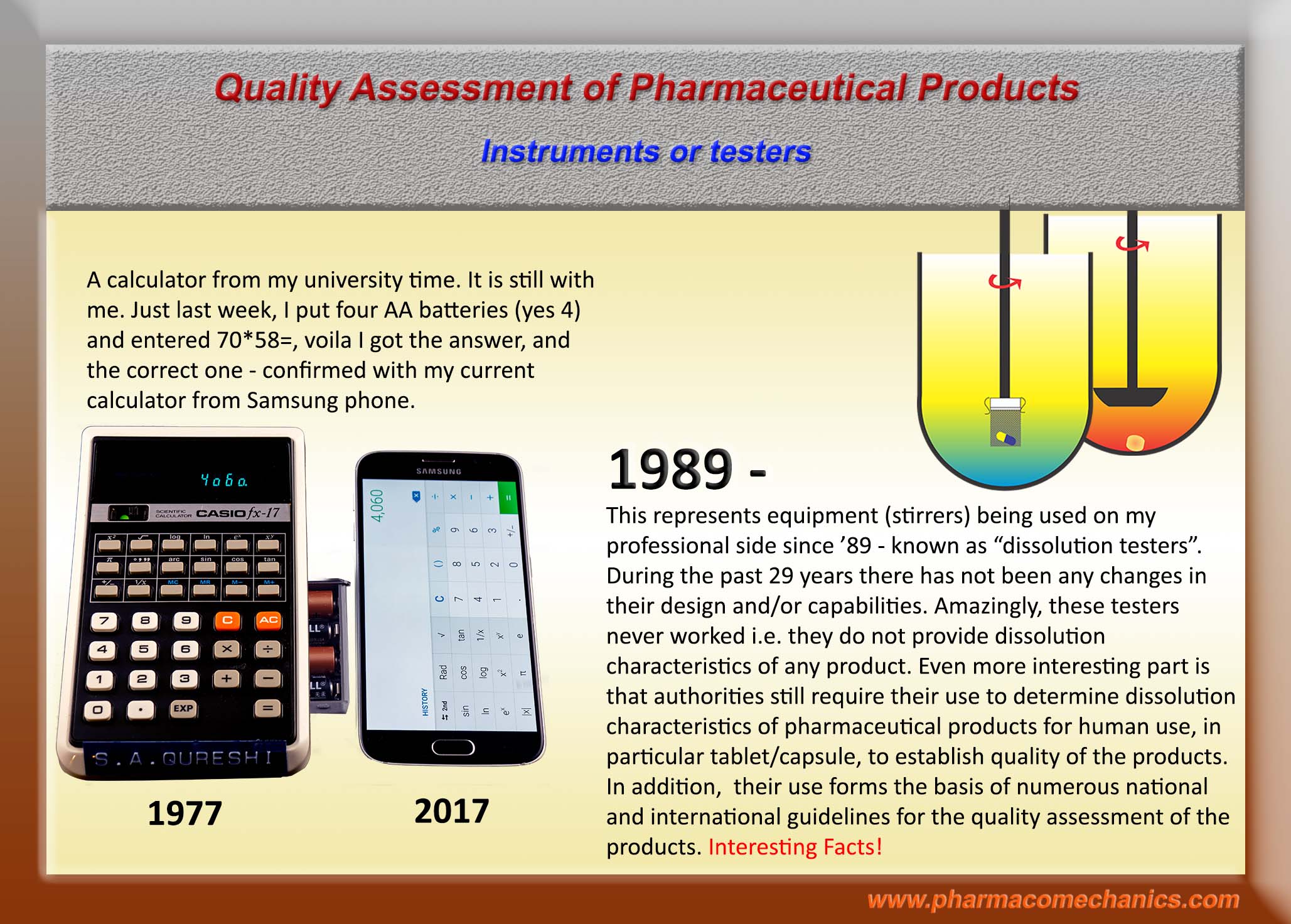
Another link/article on the same topic – A must read! Drug dissolution testers: “A modern-day mystery” – Are people being fooled by promoters of (paddle/basket) dissolution testers? It appears so! (Link).
USP’s Instrument Qualification U-turn: A new headache for the industry and regulators and a possible solution

Recently USP revised General Chapter <1058> [Analytical Instrument Qualification (AIQ) – 1, 2]. Generally it is recognized that instruments described in the pharmacopeias (e.g. USP) are suitable and qualified for their intended purpose so laboratories/industry may use these with confidence as per recommended specifications. In addition, instrument manufacturers provide such instruments meeting or exceeding the recommended pharmacopeial specifications. However, with the revised Chapter <1058> this situation has changed. Continue reading
Compliance does not necessarily equate to quality

Quality has to be defined and measured independently. At present, as definition of the quality of a (pharmaceutical) product, such as tablet/capsule, is not available thus it cannot be measured and/or established (link).
Consider attending the upcoming seminar to learn how quality of a pharmaceutical product can easily be defined and then how it can be measured efficiently and scientifically (link).
Necessary knowledge of physiology, pharmacokinetics, pharmaceutics or modelling/simulation can be acquired or learned with an amazing simplicity. In addition, scientifically valid dissolution results can be obtained with ease which can easily be transferred to plasma drug levels, without involving in vitro-in vivo correlation (IVIVC) step.
Focusing on defining quality and then establishing it by measuring its parameter which will lead to simple, efficient and cost effective product development and manufacturing practices, with significantly reduce regulatory burden.