Category Archives: Uncategorized
De-aeration of dissolution medium: No funny explanations or justifications, please!
It is important to note that de-aeration may impact dissolution results, just like testing at different temperatures or rpms can provide different results. Seeing different results does not mean much. These observations are pretty much irrelevant and useless for the purpose dissolution testing. The requirement of de-aeration is irrelevant, just like that of conducting dissolution tests at a higher or lower temperature would be.
Dissolution tests should always be conducted under relevant experimental conditions considering the objective of the testing. For an appropriate dissolution testing, the media temperature should be maintained at 37 ºC and the dissolved gasses levels should be equilibrated at this temperature. Results obtained otherwise would be considered scientifically invalid and useless for the purpose of evaluation of quality (e.g. QC) of products for human use.
No funny explanations or justifications, please!
De-aeration of a medium and vibration free environment – perfect attention deflectors
It is a well-established fact that current dissolution apparatuses (paddle/basket) are flawed and cannot provide relevant and reproducible results. The flaw is because of poor hydrodynamics within a dissolution vessel i.e. product and medium do not interact appropriately and reproducibly resulting in cone formation, tablet/capsule positioning effects etc. Thus, tests provide highly variable and unpredictable results, which have been shown in many reported experimental studies.
Rather than addressing the issue or the flaw, unfortunately focus has been diverted in promoting that the reasons of such unpredictable behaviour are due to lack of control of de-aeration of dissolution medium and presence of vibration in and around the apparatuses. It is important to note that there is no logical or experimental basis or evidence available in support of such a view. However, there are persistent discussions and promotions of such views.
It may be important to further note that this promoted view of the de-aeration or vibration aspect originated from frequent failures of calibration of apparatuses using USP prednisone tablets. The effect of de-aeration and vibration on actual products for human use is almost non-existent. The use of chemical calibration has already been considered unreliable because of the unpredictability of results or failure of perfectly working dissolution apparatuses. Their use is gradually diminishing, however, “slogans and chanting” of de-aeration and vibration continues.
Therefore, analysts should critically evaluate the promoted views on the topic as these are not scientifically valid claims.
The dissolution tests are conducted to evaluate drug release characteristics of products in the human GI tract, which is neither de-aerated nor vibration free. Therefore, conducting dissolution tests in a de-aerated medium and/or vibrating free environment should be considered as a physiologically irrelevant practice as well.
For appropriate dissolution testing, the medium should be equilibrated with dissolved gases at 37 ºC and stirred gently but thoroughly.
The one common requirement for SUPAC, Bio-waivers (BCS), Similarity factor, IVIVC, QC-testing, predicting blood drug levels, pharmacopeial testing (e.g., USP), ICH (e.g. Q6A), and QbD: Relevant and valid drug dissolution results!
However, it is important to note that none of the currently suggested apparatuses and procedures can provide relevant and accurate dissolution results for any product.
The reason being NONE of the suggested and recommended apparatuses/procedures are qualified and/or validated for dissolution testing. Most, if not all, reported testing and results do not reflect dissolution characteristics of the products but rather the presumed ones, obtained by selecting product dependent experimental conditions. See link for further details (Drug dissolution testing: Limitations of current practices and requirements).
As all of the above mentioned guidances are dependent mostly on drug dissolution results, obviously, these documents cannot provide an intended and useful interpretation about the quality of pharmaceutical products in particular tablet and capsule.
A new or modified apparatus and/or procedure is required for appropriate uses/applications of the above mentioned documents. A modified dissolution tester with crescent-shape spindle, and a single set of experimental conditions may be used to address the flaws of the current practice providing improved product development and evaluation. Link for further details: A Simple and Unique Approach for Developing and Evaluating Products.
Note that no one can determine, or has determined, dissolution characteristics of any product using the currently suggested apparatuses and/or methods. It has all been an illusion!
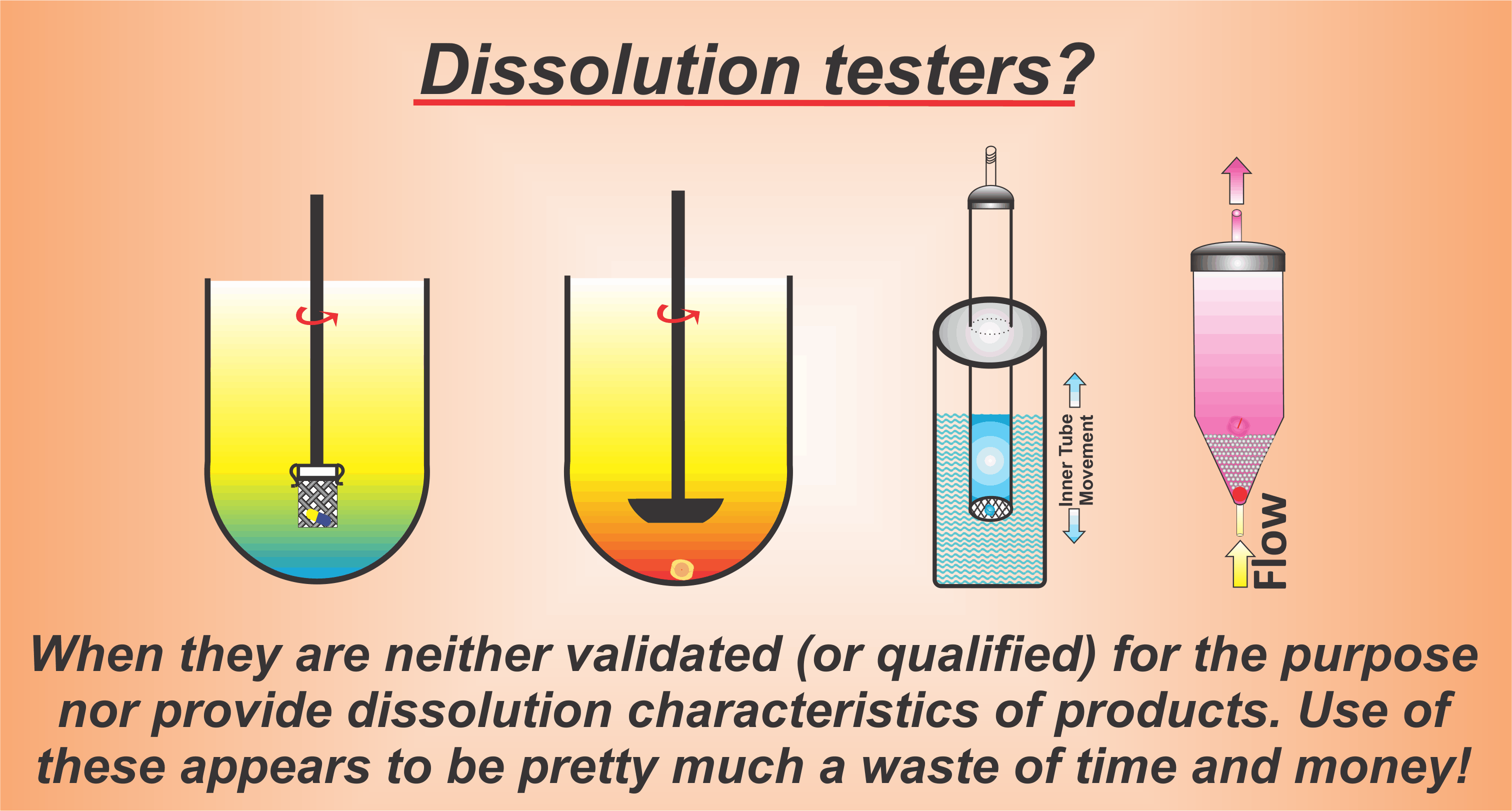
The purpose of a dissolution test is to determine or establish drug dissolution or release characteristics of a product, in particular tablet or capsule. To determine dissolution characteristics, or any other characteristic in general, one would require a method and/or tester or apparatus. Prior to its use, it must be established that the method/tester is capable of providing an expected outcome, i.e. in this case the method/tester is capable of providing dissolution characteristics of a (tablet/capsule) product. In other words, the dissolution method/tester should be qualified and validated.
Unfortunately, at present, suggested and commonly used dissolution testers have never been shown as qualified and validated dissolution testers. Therefore, reported results, and by extension conclusions drawn from these results, are of limited or no relevance or use. It is all an illusionary science and interpretation of data/results.
The crescent shape spindle has been proposed to address this present-day difficulty. The use of the spindle provides an ability to test products using a common, simple testing and product-independent approach.
Comments on a recent article
I read a recent article published in the American Pharmaceutical Review titled “A Rational Approach to Development and Validation of Dissolution Methods” by G.P. Martin. In the article author suggested approaches one may take in developing drug dissolution testing methods.
It is unfortunate that the author ignored the current views and literature highlighting flaws of current practices of drug dissolution testing. Not only are the scientific approaches described in the articles are weak, more appropriately inaccurate, but the logical thinking would also not support the arguments presented. For example, it is stated that:
Why are current practices of dissolution testing so confusing, frustrating and complex? Because they are not based on scientific principles but on rituals!
Scientific rationales/requirements dictate that:
(1) A dissolution test should be conducted to reflect in vivo dissolution characteristics of a product (tablet/capsule). However, if and when results appear to match/associate with in vivo results (which are rare) then the test will be considered successful, otherwise, the failed tests will still be considered acceptable and used for assessing the quality of future batches.
(2) The failed or irrelevant dissolution methods should not be acceptable but are considered “fit for use” for the evaluation of quality of product for human use. Almost all tests at present, in particular pharmacopeial, are of this type. Continue reading
Assessing drug dissolution characteristics using product dependent methods is simply unscientific and invalid practice.
Evaluating dissolution characteristics of different products (e.g. IR and ER) using different methods is like measuring temperatures of a drink and meal/bread using two different scales with a justification that they have different contents and/or are prepared differently. Bizarre!
It is hard to believe that in this day of age, we are to follow such unscientific, illogical and invalid reasoning and practices.
If two different temperature scales (or thermometer scales) are to be used to monitor temperatures of drink and meal/bread, then how will one establish which one is hotter/colder than the other?
Similarly, if dissolution/release characteristics of different products are to be measured using two different scales (in this case methods, in particular product specific methods), then how will one know which one is of faster release and which one is slower release type?
In conclusion, using the current practices of dissolution testing one never determines the dissolution/release characteristics of any product. For appropriate testing, it is essential to have single and product independent tester and/or method.
Predicting plasma drug levels does not require an IVIVC development. In fact IVIVC cannot be used for such predictions at all, as explained with an example from literature for gliclazide ER products
It is often suggested that conducting IVIVC studies, i.e. developing a relationship between in vitro (dissolution) and in vivo (plasma drug level), are necessary for developing dissolution tests capable of reflecting or predicting plasma drug levels. Unfortunately, this is not a correct view, as explained below:
Chemistry aspect of drug dissolution/absorption in the GI (gastro-intestinal) tract
When an oral product, usually a tablet or capsule, is taken, it almost instantaneously goes into the stomach (gastric compartment). The gastric environment can be described as an acidic (mostly HCl based) aqueous solution (pH 1 to 3) with a churning (moving and mixing) process. Assuming a disintegrating type product, the product will disintegrate into solid particles/aggregates. Once in this disintegrated form, the drug will behave exactly like granules in dilute acidic solution with mild stirring in a beaker or flask. In case of non-disintegrating type tablets, the drug will be released or leaked-out from the unit into the acidic solution.
If the drug is soluble then it will move into the intestine as a solution, otherwise as a slurry or suspension. The important thing to note here is that with some delay, the drug will move into the intestinal component. Here the acid solution or suspension will be mixed with a strong buffer turning the acidic liquid to basic, more accurately less acidic in the pH range of 5 to 7. Considering the variability in contents and the rates of entrance of the two solutions i.e. slurry from the stomach and the buffer from pancreas, it is almost impossible to accurately determine or establish the pH of the soup. However, it is a well-established fact that pH in this area of intestine ranges between 5 and 7. Therefore, for all practical and standardization purposes one can use pH of 6, an average of 5 and 7.
Drug absorption in humans as a liquid-liquid extraction process
Suppose someone is given an assignment to obtain/extract propranolol (PL) from a mixture of microcrystalline cellulose (MC) and a propranolol·HCl (PL·HCl). In a sense, it will be a fractional extraction procedure where one would exploit differences in the chemical or physical nature of these two compounds. The very first difference one observes will be in their aqueous solubilities; MC is not soluble in water, but PL·HCl is. So, one can separate PL·HCl from MC by simply adding some water and filtering it. The PL·HCl will remain in solution form but MC will be separated out as precipitate. However, PL will still be in its hydrochloride form. To extract the PL, one may require a liquid-liquid extraction step. In this regard, one first needs to adjust the pH of the aqueous solution so that the HCl part can be neutralized and PL·HCl should be available as PL which could then be extracted with an organic solvent (e.g. hexane or dichloromethane). Adding some alkaline solution to PL solution will increase the pH of the solution to a much higher level, e.g. pH 12. Most of the PL will now be in undissociated form and can be extracted into the organic phase. One or two extraction repeats will transfer PL into the organic phase which may be removed by evaporation, leaving behind pure PL in its native or basic form.
On the other hand, if one is unable to increase the pH of the solution to 12, to avoid potential complications, then a lower pH may be used. The same extraction step can be used, however, one would require an increased number of extraction repeats for complete extraction of PL from the aqueous solution. The end result will be the same i.e. complete extraction of PL form in its native or basic form in the organic solvent.
It is important to note that one can also perform the above described extraction in one step (i.e. without separating MC by filtration first). In this case, adding some milder buffer having a pH around 7 to the mixture, to avoid any complications of higher pH with MC. Continue reading
A critique of a recent article published in American Pharmaceutical Review (Jan/Feb 2013 issue)
In a recent article, titled “Stage Appropriate Dissolution Methods in Formulation Development”, published in the above mentioned journal, the author presented a view as to how dissolution method requirements change as a project advances in time (link). Unfortunately, not only is this view logically flawed but scientifically invalid as well.
A dissolution method is used for the estimation of drug release characteristics of a product, mostly tablets and capsules. Therefore, by definition, a method just like any other scale or measuring method (thermometer, weighing scale, density, etc.) must remain constant. A product, or stage, dependent scale/method will be considered scientifically invalid for this reason.
Further, during the product development stage, a dissolution method is used for evaluating the impact of different variables (formulation and/or manufacturing) so that a product with appropriate drug release characteristics is developed. Therefore, again, a constant method is required during the product development exercise. If the suggestion is to keep changing the methods (scales) at every stage, then one wonders how would one establish dissolution characteristics/rate of a product or any product. For a more detailed explanation and discussion on the topic please follow the links:
(1) Limitations of Some Commonly Described Practices in Drug Dissolution Testing and Suggestions to Address These. (http://www.drug-dissolution-testing.com/?p=810).
(2) Blog (www.drug-dissolution-testing.com)
In my view, the author had provided information which is not scientifically valid, and would not be helpful in developing useful dissolution methods.
Note: This post has been shared with the author of the article, who provided the following response which is greatly appreciated. Also, I took the opportunity in introducing Dr. Hawley to the newly suggested crescent shape spindle which may help in developing a “universal” dissolution tester. Saeed
Biorelevant in vitro performance testing: A fancy description for drug dissolution testing using scientifically invalid practices
It is important to note that by definition a drug dissolution test has to be a biorelevant test. A non-biorelevant dissolution test is just like a non-biorelevant thermometer or non-biorelevant pair of eye glasses i.e. such things have no practical use or purpose. However, unfortunately, in the pharmaceutical area, in particular for oral (tablet/capsule) products, not only does such non-biorelevant testing exist (e.g. pharmacopeial) but it is the norm, strongly promoted and defended which causes enormous confusion and financial losses.
The reason for this confusion is that non-biorelevant methods are presented as biorelevant and useful in fancy wrappings, or with catchy phrases, e.g. the one mentioned in the title (“biorelevant performance testing”) or by confusing with other names such as BCS, IVIVC, bio-waivers, f2, QbD etc. In reality, the issue is not how is dissolution testing presented and described, but rather how the tests are conducted and results are evaluated.
For example: (1) the apparatuses currently used, even those recommended by regulatory authorities, have never been qualified and/or validated for dissolution testing purposes. In fact, it has been shown many times that the apparatuses provide irrelevant and unreliable results; (2) recommended experimental conditions are mostly selected arbitrarily lacking physiological or scientific rationale; (3) tests are conducted using product specific (i.e. not product independent) procedures or experimental conditions thus results obtained are biased and cannot relate to the actual quality of a product; (4) there are no existing criteria or standards available which could be used to relate dissolution results for product quality. That is, no procedure is available to set physiologically relevant tolerances with scientific or statistical relevancy or credibility. For further details see here.
In conclusion, if dissolution results have been obtained using traditional approaches/methods then their interpretation and usefulness will be of questionable merit at best.
Establishing drug solubility for absorption/dissolution purposes
It is generally accepted that for a drug to be absorbed from the human gastrointestinal (GI) tract, it should be in solution form which is established based on solubility/dissolution characteristics of the drug. This in vivo dissolution is determined using in vitro drug dissolution tests.
It is also generally accepted that higher the solubility of the drug, the higher the dissolution and absorption, and their corresponding rates, will be. In addition, it is also a well established fact that absorption preferentially occurs from the non-polar or undissociated form of a drug. On the other hand, the undissociated, or non-polar moiety, of a drug often shows lesser aqueous solubility compared to its polar version.
For example, propranolol is a drug which is basic in nature with a pKa value of 9.42 and its aqueous solubility is of 61.7 mg/L or 1 part in ~16,000 (link). Therefore, propranolol should be considered to be a low solubility drug. However, its products are usually manufactured using the drug in its hydrochloride salt form i.e. propranolol·HCl which is freely or highly soluble in water. In water it would exist in its ionic/protonated form, which would be less absorbable than the native propranolol. On the other hand, propranolol is known to be highly absorbable/permeable (bioavailability higher than 90%), which suggests that in reality the body sees propranolol as non-polar/undissociated moiety. Therefore, for in vivo dissolution/absorption purposes the solubility of native propranolol should be considered, not of its salt form. This means that in reality propranolol (and other similar drugs) is a BCS class II drug and not the class I drug, as commonly considered.
In conclusion, for drug dissolution and absorption evaluation purposes, one should consider solubility characteristics of a drug in its native form and not that of its salt form. For further discussion on the topic, the following links would be useful (1, 2, 3, and 4).
Prediction of plasma drug levels from dissolution results for OROS-based nifedipine products
Drug dissolution tests are routinely conducted to evaluate drug release characteristics of pharmaceutical products such as tablets and capsules. It is highly desirable that these tests should be conducted to reflect in vivo drug release which in turn is reflected by the observed plasma drug conc.-time (C-t) profiles in humans.
In this regard, a simple convolution based method using spreadsheet software has been suggested to convert dissolution results into C-t profiles (link1, link2). This article provides another example describing estimation of plasma drug levels from OROS-based nifedipine products using the suggested convolution approach.
Dissolution method development: Perhaps the most wasteful of all the current practices!
There are about 500+ dissolution methods listed in the FDA database and about 600+ methods (monographs) in the USP. In addition to these, there are many more, perhaps in the hundreds, dissolution methods described in literature. Moreover, as part of new product development exercises, it is a common and expected practice to develop additional new or revised methods.
It may be interesting to note that the objective of drug dissolution testing has never been to develop methods, but to determine/estimate drug dissolution/release characteristics of products. By developing drug and/or product specific dissolution tests, one in fact would never know or determine the actual dissolution characteristics of any product. The current practices of method development simply defeat the purpose of products evaluation.
For products evaluation, one requires a test/method which is independently developed and established. Therefore, current practices of method developments are not only scientifically invalid and useless but also a waste of time and resources.
The use of the crescent shape spindle, with a common set of experimental conditions, is suggested to address the current difficulties. The suggested approach not only practically eliminates the need for method developments, in particular product dependent, but also provide a scientifically sound and valid drug dissolution testing and product evaluation approach (e.g. see link, link2).
The following links may be useful for further information regarding the difficulties of the current practices: Continue reading
Incorrect assumptions for developing an IVIVC and its uses
Developing an IVIVC and its applications are often described in literature as follows (e.g. see link):
“In vitro – in vivo correlation (IVIVC) allows prediction of the in vivo performance of a drug based on the in vitro drug release profiles. To develop an effective IVIVC, the physicochemical and biopharmaceutical properties of the drug as well as the physiological environment in the body must be taken into consideration. Key factors include drug solubility, pKa, drug permeability, octanol-water partition coefficient and pH of environment.”
There are number of deficiencies in the above mentioned description. For example:
- “in vivo performance of drug”, IVIVC studies are commonly conducted for products (such as tablets and capsules) and not for drugs.
- An IVIVC does not allow prediction of in vivo performances from in vitro results. In vitro studies (testing) are conducted based on the assumption that the IVIVC already exits.
- Furthermore, considering the existence of IVIVC, in vitro (dissolution) results are used to reflect or predict expected plasma drug concentration-time profiles.
- The mathematical approach used for the prediction of plasma concentration-time profiles is not the IVIVC but the convolution technique. This (convolution) is the only technique which can be used or applied for the prediction of plasma drug profiles of products.
- The parameters mentioned above such as, drug solubility, pKa, drug permeability, and octanol-water partition coefficient, are all drug characteristics, and not those of the products for which dissolution tests are conducted. Therefore, these parameters often remain constant, or are kept constant, to evaluate the impact of formulation and/or manufacturing attributes on release/dissolution characteristics of a product.
- Regarding the “pH of environment”, this is linked to GI tract physiology and is independent of the drugs and products, thus for drug dissolution testing the environment must also remain constant and independent of products and/or drugs.
Therefore, the IVIVCs as currently conducted or promoted are not of any practical use and can easily be ignored or avoided.
Current practices of drug dissolution testing using paddle/basket apparatuses – A complete waste of time!
Drug dissolution tests are conducted to determine dissolution/release characteristics of a product. Therefore, one requires a pre-established set of experimental conditions (apparatus, rpm, medium volume or pH etc.) independent of the product so that the actual or true characteristics (i.e. dissolution) can be determined.
Current practices in particular using paddle and basket apparatuses, however, require that the analyst MUST first know, or anticipate, dissolution characteristics of the test product, and then ADJUST experimental conditions to achieve the desired or anticipated results. Selections or adjustments of such experimental conditions are then described or promoted, incorrectly, as dissolution method development practices. Almost every product comes with its own set of experimental conditions and expected dissolution results (commonly referred to as Tolerances). At present, one cannot know or determine the actual or true dissolution characteristics of the products. It is, therefore, very important and critical to note that current practices of dissolution testing are practically a complete waste of time and resources.
The suggestion of dissolution testing using the crescent-shaped spindle, along with a single set of experimental conditions (which are product independent as well) addresses the current issues and provides a simple, practical and scientifically valid approach for dissolution testing. For further detail please see these links (1, 2, 3).
Worth repeating it: Drug and/or product dependent dissolution tests are scientifically invalid. They do not provide dissolution characteristics of products even for QC purposes.
It is important to note that drug dissolution tests are conducted for products (tablets/capsules) and not for drugs (APIs). Therefore, it is not accurate to use or develop drug-specific experimental conditions as commonly reported.
On the other hand, drug dissolution characteristics are mostly dependent on the formulation and manufacturing attributes of a product i.e. a dissolution test is conducted to evaluate the impact of formulation and manufacturing. Therefore, for determining dissolution characteristics of a product, the test must be independent of the formulation and manufacturing characteristics of the product under consideration. This means that one is required to use a pre-established dissolution test independent of the product under consideration. Developing a dissolution test for a product, which is being developed, and then using it to show its own dissolution characteristics, as currently done, is obviously a scientifically invalid practice.
Furthermore, it is to be noted that dissolution medium and other experimental conditions are linked to the physiology of the human GI tract, which remains constant, and also drug and product independent. Therefore, if one uses drug/product dependent experimental conditions, then this will make a dissolution test bio irrelevant and product evaluation pretty much useless, even for QC purposes. The following link may be of further help in this regard (link).
Why did the quality-by-design (QbD) approach fail? One reason: Lack of availability of relevant and reliable data reflecting the “quality” of products (tablets/capsules).
Recently I participated in a discussion on a LinkedIn forum (Quality by Design or QbD) explaining relevance and critical importance of drug dissolution testing for QbD, manufacturing of the products (tablet/capsules) and their evaluations.
Continuing on the topic, I believe a better organized explanation may be useful in clarifying issues related to the assessment of quality of pharmaceutical products. This article provides the explanation. It is important to note that the following discussion is restricted to tablet and capsule products only. Please click here for complete article
Current practices of drug dissolution testing are not aligned with expectations or requirements.
It is commonly accepted, and as described in one the FDA guidance documents (link), that “For highly water soluble (BCS classes 1 and 3) immediate release products using currently available excipients and manufacturing technology, an IVIVC may not be possible.” i.e. a relationship may not exist between in vitro dissolution and in vivo dissolution (as obtained from the bioavailability studies). Then, the obvious question is why should one use the dissolution test to evaluate such products, even for quality control purposes? The purpose of a QC test is to indicate potential deviation of in vivo drug release characteristics. However, if the assumption/view is that the relationship between in vitro and in vivo behaviour does not exist then what is the use of such a QC test, in particular for IR products with highly soluble drugs.
The reality is that the relationship between in vitro and in vivo dissolution always exists, which forms the basis of conducting drug dissolution testing. However, the way drug dissolution tests are conducted at present, using commonly recommended apparatuses, in particular paddle and basket, do not measure the dissolution properties accurately and reproducibly which is reflected/considered as a lack of in vitro-in vivo relationship. In addition, dissolution studies were never intended to develop or establish IVIVC, but to use the relationship to predict plasma drug levels.
In this regard, if one uses a modified apparatus, such as with the crescent shape spindle, which provides appropriate product/medium interaction, then the dissolution tests can generate in vivo relevant results, as expected. For further details on conducting appropriate dissolution studies and in predicting blood levels please see the links (1, 2).
A simple approach to assess the validity of a dissolution tester/method
Before one uses a tester/method, it is mandatory, in particular in a GMP environment, that the validity of its use be established i.e. does the tester/method measure the expected characteristics of the product? In the case of a dissolution tester/method, one expects that it should measure the drug dissolution/release characteristics of a product and should be able to differentiate between products having different dissolution/release characteristics. In addition, a tester/method should not just measure and/or show such differences but these measurements and differences have to be relevant and useful. Please click here for complete article
Wishing you all –

Objective of drug dissolution testing – keeping it simple and clean
It is very important to note that the objective of dissolution testing is to estimate/determine potential drug dissolution/release characteristics of a drug from a product using a simulated gastrointestinal (GI) tract environment. The simulated GI tract environment for dissolution testing purposes is commonly represented by a medium such as water or an aqueous buffer (e.g. pH=6) in a container (vessel) maintained at 37 °C with gentle mixing/stirring. If the volume of the medium is not sufficient to completely dissolve the expected amount of drug present in the product, then a small amount of solubilizer (e.g. SLS) may be used. Dissolution results are often expressed as percentage of drug released at a single time (e.g. 30 or 45 minutes) or multiple times to establish a dissolution profile.
A dissolution test is just like any other simple analytical test utilizing an instrument, such as a thermometer, viscometer or pH meter that one uses for measuring temperature, viscosity and pH of a product, respectively. One does not require, or develop, a product specific thermometer, viscometer or pH meter. One just puts the thermometer or electrode into the liquid or pours the liquid into the viscometer to obtain the reading. This reading will reflect the property of the liquid.
A dissolution tester should be used exactly like that, i.e. monitoring/measuring of dissolution/release characteristics of a product (tablet/capsule) by dropping a tablet/capsule into a dissolution vessel containing a standard volume of dissolution medium with a stirrer and a pre-set rpm. The outcome of the test (% dissolved) will reflect the dissolution characteristics of the product.
No matter how one presents the argument, or dissolution results, describing them such as bio- or IVIVC relevant, discriminatory, or for QC use, the tests must be performed using pre-set and product independent experimental conditions. This is similar to the practice of not requiring a discriminatory or bio-relevant and/or liquid dependent thermometers, viscometers or pH meters, because not only will it logically and scientifically be considered meaningless but will never reflects true product’s characteristics. Similarly, one should not ask for and/or try to develop product dependent dissolution testers or methods (Please, click here to read in detail about dissolution testing).
Dissolution testing using the crescent shape spindle has been developed based on these thoughts which provide simple, scientifically valid and product independent testing and evaluation. For further information in this regard please see the following links (1, 2).
Promotion of simplicity of paddle/basket apparatuses – A marketing gimmick for scientifically useless and non-validated apparatuses
It is now generally recognised that the commonly recommended dissolution testers (paddle/basket) do not provide bio-relevant dissolution results. In addition, it is also well recognised that considering the flow dynamic within the vessels, these testers will provide highly variable and unpredictable results, thus would be of limited or of no use for routine testing as well.
Considering the need and importance of dissolution testing for product development and assessment, it is surprising that it is often suggested that in the absence of another “simple” alternative, one must keep using these testers. Such a suggestion is simply a marketing gimmick to promote the continued use of a flawed technique. It is almost like bicycle promoters suggesting that until and unless proper boats or ships are developed, people must keep using bicycles to cross rivers, because it is the only simpler and cheaper mean available and allowed for such transportation purposes.
On the other hand, the reality is that it is well known that it is the stirring and mixing mechanism, and environments within dissolution vessels which are causing the problem and require change or adjustment. In this regard, it has been shown that with a simple alteration, for example replacing paddle/basket spindle with the crescent-shaped spindle, not only are the artefacts of the paddle/basket apparatuses corrected but dissolution testing itself becomes relevant and extremely simple. For example: (1) one will be able to conduct product independent tests as opposed to product dependent tests, which is a scientifically incorrect practice to start with; (2) as the testing becomes product independent, one will avoid requiring method developments thus reducing cost and time; (3) the same set of experimental condition will be used for product development and QC purposes, thus again saving cost and time; (4) from the simplicity aspect, testers maintain the simple configuration and operation of the basket/paddle apparatuses.
Therefore, it is important to note that there is no reason that one should continue using a flawed system and keep generating useless data. A simpler and improved dissolution tester can be developed by simply modifying the currently used paddle/basket apparatuses e.g. by replacing a stirring element in it with another, such as with the crescent shape spindle.
Drug Dissolution Testing – A serious concern!